

From the Archives: The Process for Shaping My Poetry Book Raíces, Relics, and Other Ghosts
In light of my interview with poet Cathy Ferrell about my writing journey, I’ve been thinking a lot about a Substack I published this time last year about how I came to write my debut book.

But also! If you haven’t read ferrellwords gorgeously curated interview of me, please check it out:

Cathy is doing a book launch campaign for her debut chapbook with Kelsay Books, and I think she’s doing great literary citizenship by highlighting other poets while sharing about her work!
And now, for my post from the archives:
I’ve been writing poetry on and off since the 7th grade. After high school, I almost completely stopped writing because I started college and focused on “something that would make me money.”
I went into K-12 teaching, and that same year, the pandemic began. I was already struggling as a first-year teacher who couldn’t manage her in-person students. Now, I had to manage them online after an abrupt school closure. Turns out, that wouldn’t be an issue because many of them just didn’t show up.
Even though my students threw classroom challenges at me, I missed their daily sass, good sense of humor, and hope for the world. My relationship with my partner at that time was falling apart too, and our being in two separate rooms working remotely compounded the isolation I felt at the time.
This is when I returned to poetry. To reading. To embracing the troubling things I felt instead of just masking them for the sake of making everyone else feel more comfortable. I wrote my first poem in almost a decade, titled “Isolation,” really personifying the farm fields surrounding my apartment complex with loneliness.
From that point, I was hooked. I knew I needed to keep writing, and I knew that I needed a project that had nothing to do with the then-mysterious virus upending our lives. I leaned into that feeling of loneliness, reflecting deeply on myself and my life experiences to look for gaps I can analyze and attempt to mend.
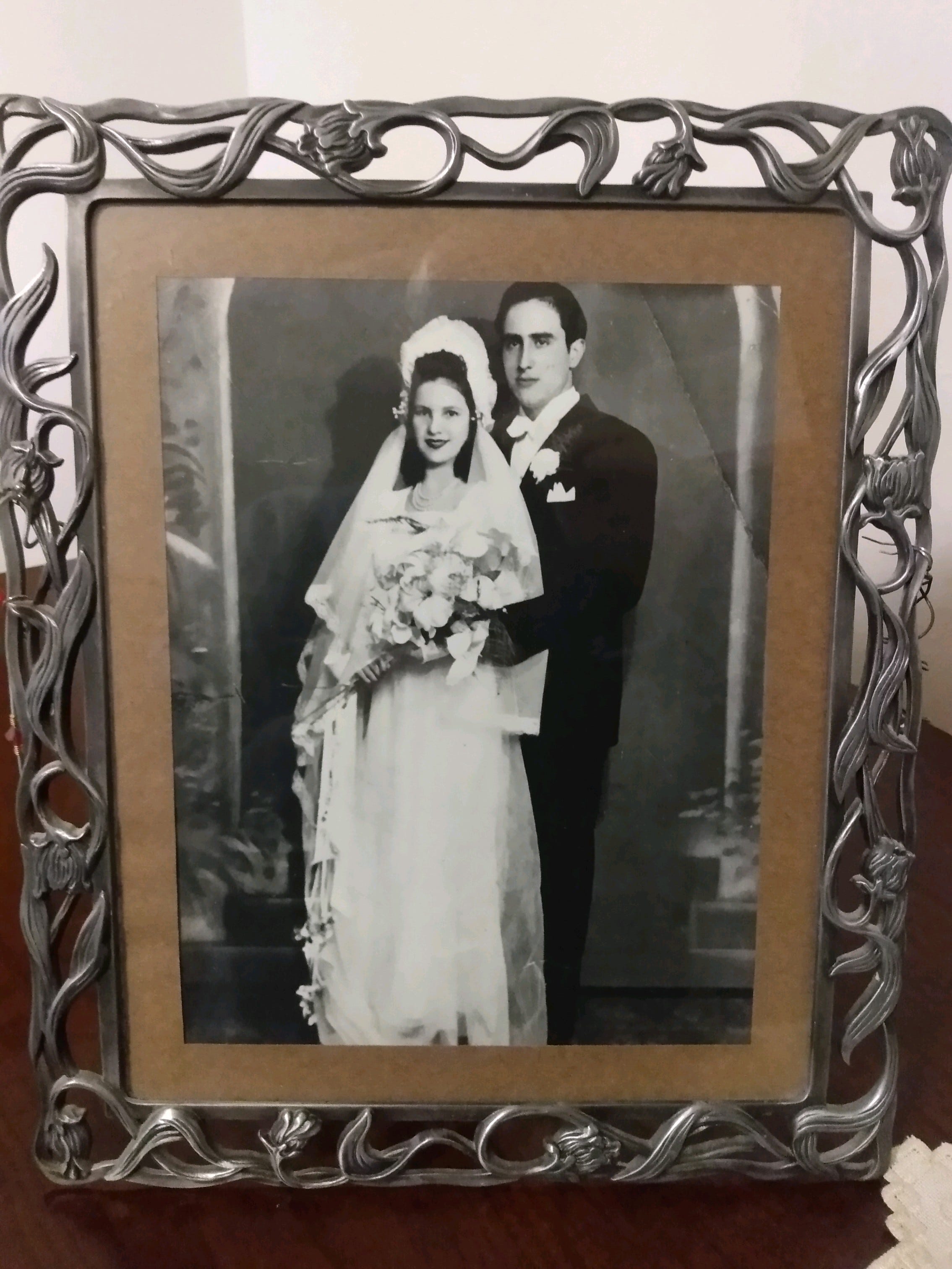
That’s when I thought of it: the wedding photo, my dad’s parents (mis abuelos) I never knew, the whole half of my identity that’s a question mark.
Cultivating the Project
When I started writing Raíces, Relics, and Other Ghosts, I mostly leaned into trying to build relationships with my estranged family members, asking them about mis abuelos and about our story. I also did genealogy research. I was expecting to find answers to my questions and write a compelling “story arch” for my poetry collection that finally felt triumphant.
Instead I found:
Dead ends.
False documents.
Fabled artifacts.
“I don’t remember.”
“Don’t ask me that again.”
"I don’t know; I never asked.”
Door after door after door slammed in front of me, and it didn’t take me long to realize I had maybe 10 poems worth of writing from all the searching I’d done.
I had a choice to
either re-sculpt this into a chapbook, or soul search again and figure out what I really wanted from writing this book. Were answers really all I was looking for? Or was there something deeper to this project’s pull?
Planting Seeds
I re-read what I had and realized the poems all felt like I was watching a sepia video. It felt so far away, and it felt intangible. The poems were only in the past tense, a place I’ve never lived and a place where my words can’t reach anything.
I needed the now. I needed the someday, hopefully soon. I needed the for my future children.
With this, I believed I could still write a full-length collection, but I needed to get more organized because the focus wasn’t just on the past anymore.
I decided putting section dividers in my collection would help me organize my ideas and conceptualize this idea of growth. Section one is the feeling of confusion, loss, etc. Section two is my tangible learning and hitting the dead ends. Section three is realizations, and thinking about the present and future tense of my familia’s story.
Once I clarified this structure, I still felt the collection needed another binding agent. Something to increase the imagery and sentimentality, which is hard to have without having actually shared moments with mis abuelos and familia I’d never met. So I began writing persona poems where I imagined moments with mis abuelos or moments where I found the answers I was seeking.
I also dug my heels into what I can do, now, in real time, to preserve my heritage (what’s left of it) for the future. I brushed off my dusty Spanish textbooks and downloaded language apps. I had phone calls with my tia as she walked me through how to make Puerto Rican dishes. I started forming relationships with my family because I liked them, they’re cool, and I wanted to know them!
All of these things created energy for me, whereas before, this quest felt draining and like a series of “nope.”
This energy sparked play, something I’m learning to do better each day I’m alive. When I learned a new word or cultural concept, I analyzed various connotations and denotations to flip the concept on its head or to add more layers to it. I switched from English to Spanish when the choice increased reader impact or poetic musicality. I explored poetry craft terms as I learned them: repetition, extended metaphor, motif, slant rhyme, etc.
Each poem was a new playground to learn from, and that really allowed me a full range of exploration for the collection.
However, I still needed to find a way to acknowledge the dead ends from before. To not acknowledge them is to reject parts of the grieving process that are necessary to heal into. Also, books that are “and they lived happily ever after and no part of the story was ever sad again” is false, simple, and not a how I wanted my collection to end.
Nurturing Sprout and Grown Plant
Part of the process of bringing my familia and my heritage into the present tense was learning to accept what I had control over in this story and what I didn’t. I wrote poems about what was lost, what was found, what was reimagined. Not wanting or yearning for it to be different. I think this final section of the book really leans into disenfranchised grief; the grief cycle ends with acceptance, and I believe that’s where I needed to land for the book too.
This allowed me to not just say “This is what I want latinidad to look like for me.” It’s also “This is what latinidad looks like for me, what being Norse and Puerto Rican looks like for me. How being intersectional in a country that likes the melting pot idea will look like for me.”
Acceptance is hard and uncomfortable, but it’s also freeing.
For my readers living in diaspora, this is the feeling I wanted to leave them with: “We are multitudes. We are all of this.”
Other Considerations:
The brainstorming and refining of ideas for the collection is a huge part of my process. But there are also logistics at play, I assure you.
For my writing process I:
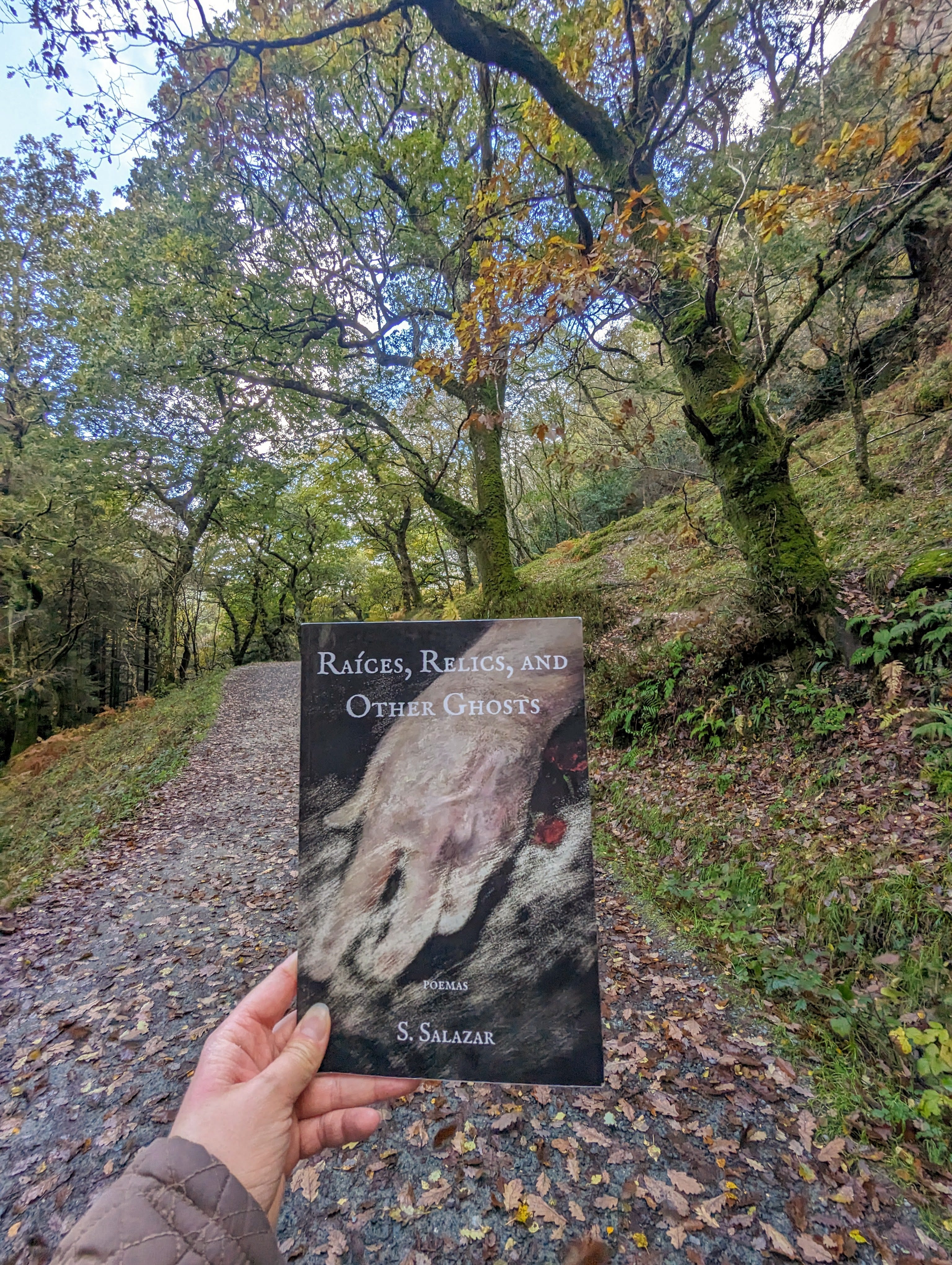
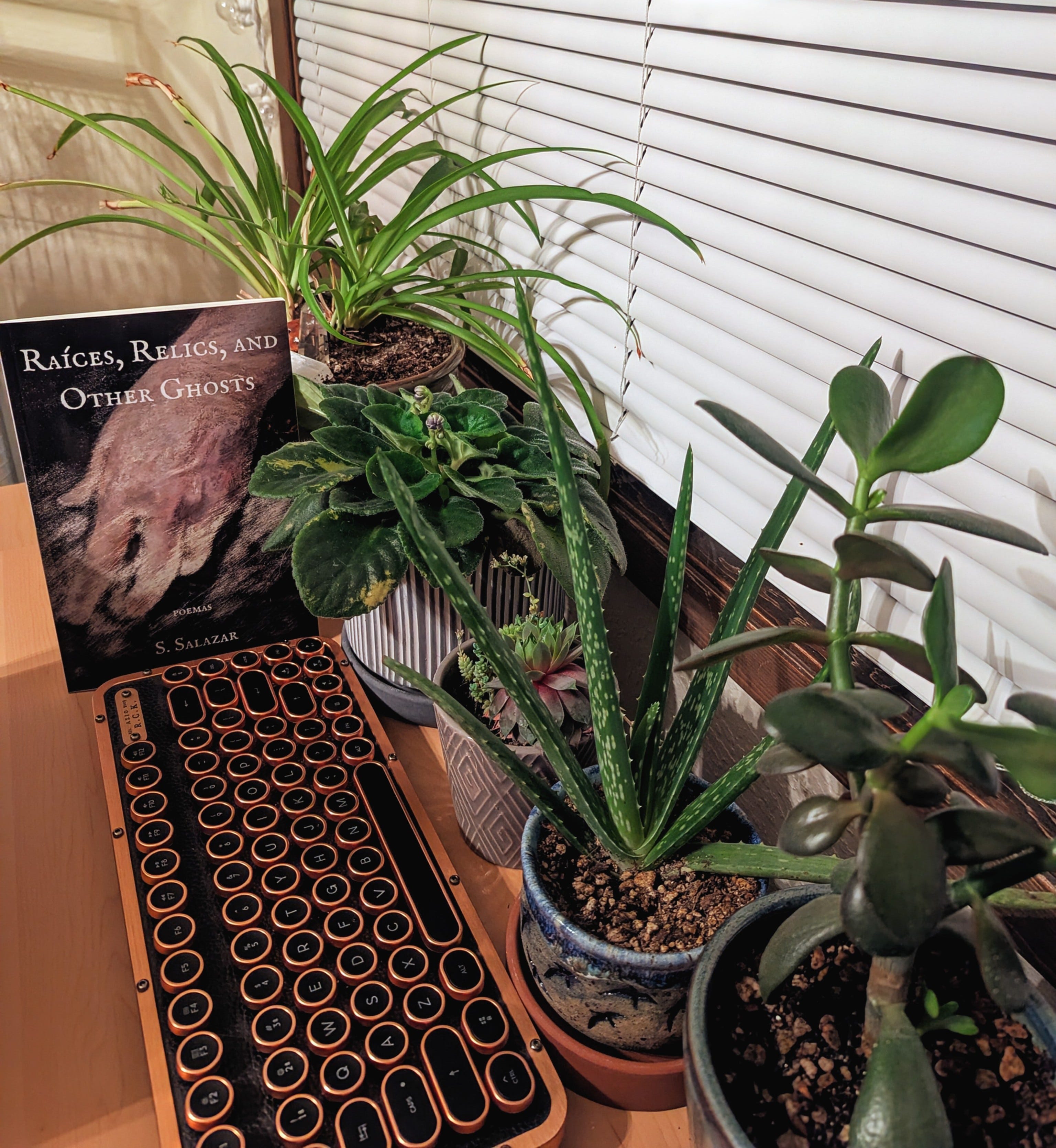
Went out in nature all the time. Hiking is something I really enjoy, and it grounds me. Also, this book has a lot of plant imagery, so that outdoor time was conducive to my ideas. When the outdoors wasn’t an option, I made sure to have plenty of plants on my desk to keep me rooted to my motif (all pun intended).
Took online generative workshops by Latinx authors or those who wrote about ancestry/diaspora. This helped me find new view points or learn new aspects of poetic craft.
Read poetry. A lot. I was particularly inspired by Karla Cordero’s How to Pull Apart the Earth and Ada Limon’s The Carrying.
Read outside of the genre too. Reading YA influences my poetic voice because I think it gives me a fun balance between lyrical and zesty.
Took part in an accountability and workshopping group through Alegria Publishing. Accountability partners and goals for weekly, bi-weekly, or monthly deadlines are helpful when working on a project. Otherwise, a project can just stay that and never see completion.
Did not write daily. Not as a teacher during the pandemic. But honestly, I’m not a write each day kind of person anyway. Instead, I had set days (usually 3 times a week) that I would dedicate to my poetry. I had to write those days (unless there was an emergency or I was ill). That was my promise to myself, and it worked!
Wrote at a time my writerly brain was on. As romantic as the 5 AM Writers Club sounds, I don’t vibe with mornings. The only things mornings have going for it are the bird sounds and fresh coffee. I’m a night owl, and even to my day job’s detriment, my best writing happens at night. I used this self awareness to form my writing habits.
Created a writing ritual: I have a few playlists I generate writing to, ones I revise to, etc. I have a cute typewriter keyboard I use only when doing creative works. I have my fairy lights that I only turn on when I’m in “writer” mode. Once all these parts of my ritual are in place, I can turn off other modes of my brain and just create.
Leaned into community. When writers block hit, I had a handful of folks I could turn to for a Zoom call or in-person meet where we could discuss our blocks or project’s sticky points. Verbal processing, for me, usually inspires an un-sticking. Even for my current projects, these folks are instrumental to my being an author. And our continued work together allows our work to make their way to the readers who need them.
My writer friends, my nonwriter friends (I have some engineers and accountants who offer some pretty poetic perspectives, y’all), my familia, my readers—mi comunidad is everything to me, and my process would be nothing without them.
What other questions about my writing process do you have? Drop them in the comments!